Comparing Centralized vs Decentralized Exchanges Insights
Comparing Centralized vs Decentralized Exchanges sets the stage for this enthralling narrative, offering readers a glimpse into a story that is rich in detail and brimming with originality from the outset.
In the rapidly evolving world of cryptocurrency trading, understanding the differences between centralized and decentralized exchanges is crucial for anyone looking to navigate this dynamic landscape. Centralized exchanges act as intermediaries, providing users with a platform to trade assets securely but with certain inherent risks. On the other hand, decentralized exchanges offer a more autonomous approach by allowing users to trade directly with one another, emphasizing security and privacy.
Both types of exchanges serve distinct purposes and cater to varied user needs, making this comparison essential for traders and investors alike.
Overview of Centralized and Decentralized Exchanges
Centralized and decentralized exchanges serve as crucial platforms for trading cryptocurrencies, each offering distinct features and functionalities. Understanding these exchanges is essential for anyone venturing into the world of digital assets, as they significantly impact trading experiences and security.Centralized exchanges (CEXs) act as intermediaries between buyers and sellers, providing a platform for users to trade cryptocurrencies against various fiat currencies or other digital assets.
These platforms are typically owned and operated by companies that handle all transactions. Some well-known examples of centralized exchanges include Coinbase, Binance, and Kraken. These platforms often come with advanced trading features, user-friendly interfaces, and high liquidity, making them popular among traders.In contrast, decentralized exchanges (DEXs) operate without a central authority. They allow peer-to-peer trading of cryptocurrencies directly between users, utilizing smart contracts on blockchain networks.
Notable examples of decentralized exchanges include Uniswap, SushiSwap, and PancakeSwap. The key advantage of DEXs is that they enable users to retain control of their private keys, which enhances security and reduces the risk of hacking.
Fundamental Differences Between Centralized and Decentralized Exchanges
The fundamental differences between centralized and decentralized exchanges lie in their operational models, security measures, and user experiences. Understanding these differences can help traders choose the right platform for their needs.
- Control and Ownership: Centralized exchanges require users to deposit their funds onto the platform, which means the exchange retains control over users’ assets. In contrast, decentralized exchanges allow users to trade directly from their wallets, maintaining ownership of their private keys.
- Security Risks: Centralized exchanges are often prime targets for hackers due to the vast amounts of assets they hold in their custody. This can lead to substantial losses in case of a security breach. Decentralized exchanges, while not immune to vulnerabilities, minimize risks by enabling users to trade without giving up control of their funds.
- Trading Speed and Liquidity: Centralized exchanges generally offer faster transaction speeds and greater liquidity due to their centralized order books. This can facilitate quicker trades and better price discovery. Decentralized exchanges may experience slower transaction times, especially during high network congestion, but they promote a more transparent trading environment.
- Fees and Costs: Centralized exchanges often charge higher fees, including trading fees, withdrawal fees, and deposit fees. Conversely, decentralized exchanges usually have lower fees since they eliminate the need for intermediaries, although users may incur gas fees related to blockchain transactions.
- User Experience: Centralized exchanges typically provide a more intuitive user experience, with advanced trading tools and customer support services. Decentralized exchanges may have a steeper learning curve for new users, requiring familiarity with blockchain technology and wallet management.
“Understanding the operational differences between CEXs and DEXs can significantly influence trading strategies and security considerations.”
Advantages of Centralized Exchanges
Centralized exchanges (CEXs) are platforms where users can trade cryptocurrencies through a centralized authority. This structure provides several benefits that enhance the trading experience, making them popular among both novice and experienced traders. Centralized exchanges often offer a more user-friendly interface, robust security measures, and diverse trading options, making them a go-to choice for many in the crypto community.
Centralized exchanges come with a range of advantages that cater to the needs of users seeking convenience and efficiency in their trading activities. Here are some key benefits that make centralized exchanges appealing:
User-Friendly Interface
Centralized exchanges typically present a more intuitive and easy-to-navigate interface compared to their decentralized counterparts. This user-friendly aspect is essential for attracting new users who may not be familiar with the complexities of cryptocurrency trading.
- Simple Onboarding Process: Most CEXs facilitate an easy sign-up process that often requires just an email address and password, allowing users to start trading quickly.
- Intuitive Design: The interfaces are designed with usability in mind, featuring charts, order books, and trading pairs that are easy to understand.
- Customer Support: Centralized exchanges usually offer customer service through various channels, providing assistance to users with trading issues or account problems.
Liquidity and Volume
Liquidity is a crucial factor in trading, as it affects the ability to buy and sell assets quickly without impacting the price significantly. Centralized exchanges usually have higher liquidity than decentralized exchanges.
- Higher Trading Volume: CEXs often experience a higher volume of trades, which translates to better price stability and lower slippage for traders.
- Market Depth: A deep order book allows for larger trades to be executed with minimal price impact, making it advantageous for professional traders.
Security Measures
While no platform is entirely risk-free, centralized exchanges implement various security protocols that can protect user assets more effectively than many decentralized options.
- Insurance Policies: Many CEXs have insurance policies in place to cover potential losses due to breaches or hacks, providing an extra layer of security to users.
- Cold Storage: A significant portion of user funds is kept in cold storage, reducing the risk of theft from online attacks.
Popular Centralized Exchanges
Numerous centralized exchanges have gained prominence in the cryptocurrency market, each with unique features that cater to different trading needs. Some of the most well-known include:
- Binance: Known for its extensive selection of cryptocurrencies and trading pairs, Binance also offers features like staking, lending, and futures trading.
- Coinbase: A user-friendly platform ideal for beginners, Coinbase provides educational resources and a secure environment for buying and selling cryptocurrencies.
- Kraken: Renowned for its robust security measures and advanced trading tools, Kraken caters to both retail and institutional investors.
These advantages contribute to the growing popularity of centralized exchanges in the cryptocurrency landscape, providing users with a seamless and secure trading experience.
Advantages of Decentralized Exchanges
Decentralized exchanges (DEXs) offer a range of benefits that distinguish them from their centralized counterparts. As the cryptocurrency landscape evolves, many traders and investors are gravitating towards DEXs due to their unique characteristics. Understanding these advantages is crucial for anyone looking to participate in the crypto market effectively.One of the most critical aspects of decentralized exchanges is their enhanced security features.
Unlike centralized exchanges, which store users’ funds in a single location, DEXs operate on a peer-to-peer network, eliminating the risk of hacking incidents that often plague centralized platforms. This architecture means that users retain control of their private keys, significantly reducing the likelihood of losing assets due to a security breach.
Security Aspects of Decentralized Exchanges
The security of decentralized exchanges can be attributed to several factors that bolster their credibility and user trust. Here are key elements that contribute to their security framework:
- Non-Custodial Nature: DEXs do not hold users’ funds, which means that users can trade directly from their wallets, minimizing the risk of theft.
- Smart Contracts: Most DEXs utilize smart contracts to facilitate trades, ensuring that transactions are executed automatically and fairly, without the need for intermediaries.
- Open-Source Protocols: Many DEXs operate on open-source protocols, allowing for transparency as the code can be audited by anyone, identifying potential vulnerabilities.
- Reduced Risk of Central Points of Failure: The decentralized nature of these platforms means that there is no single point that can be targeted by attackers.
In summary, the multi-faceted security structure of decentralized exchanges is one of their most compelling advantages, providing users with peace of mind while engaging in cryptocurrency trades.
Popular Decentralized Exchanges and Their Unique Features
Several decentralized exchanges have gained traction in the crypto community by offering unique features tailored to different trading needs. Notable examples include:
- Uniswap: A leading DEX based on the Ethereum blockchain, Uniswap utilizes an automated market maker (AMM) model, allowing users to trade ERC-20 tokens directly from their wallets. Its liquidity pools enable users to earn fees by providing liquidity.
- Balancer: Known for its flexibility, Balancer allows users to create customized liquidity pools with multiple tokens, making it ideal for those looking to manage portfolio weightings actively.
- PancakeSwap: Operating on the Binance Smart Chain, PancakeSwap is popular for its low transaction fees and fast processing times. It also features yield farming and staking options, making it attractive for investors seeking passive income.
- SushiSwap: Originally a fork of Uniswap, SushiSwap has introduced additional features like yield farming and lending, offering users more ways to earn rewards and manage their assets.
These examples showcase the diversity and innovation present within the decentralized exchange ecosystem, highlighting how they cater to various trading preferences and strategies.
Disadvantages of Centralized Exchanges
Source: sdlccorp.com
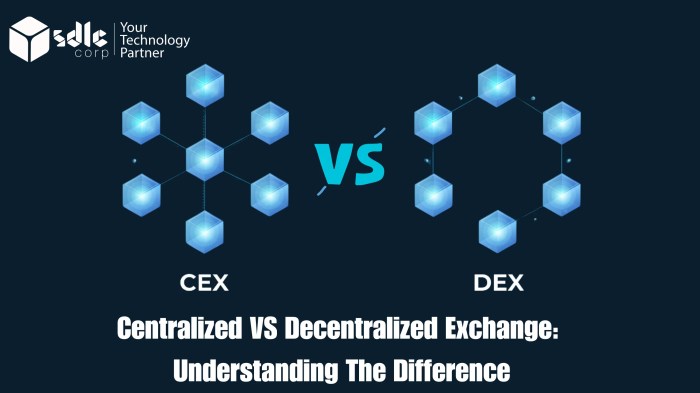
Centralized exchanges (CEXs) offer various benefits, but they also come with a set of drawbacks that can pose significant risks to users. Understanding these disadvantages is crucial for anyone considering trading on such platforms. This section delves into the inherent risks, regulatory challenges, and real-world examples that highlight the pitfalls of using centralized exchanges.
Risks Associated with Using Centralized Exchanges, Comparing Centralized vs Decentralized Exchanges
Centralized exchanges are often targeted by cybercriminals due to their large user bases and the centralized storage of assets. The risks include:
- Security Vulnerabilities: Centralized exchanges hold substantial amounts of cryptocurrencies in a single location, making them attractive targets for hacking. High-profile breaches have resulted in millions of dollars lost.
- Custodial Risks: When users deposit funds into a CEX, they relinquish control of their private keys, creating a custodial risk. If the exchange becomes insolvent or is compromised, users may lose their assets.
- Operational Risks: Technical issues, server outages, or maintenance downtime can hinder trading operations and access to funds, impacting users’ ability to respond to market changes.
Regulatory Challenges Faced by Centralized Exchanges
Centralized exchanges often navigate a complex web of regulations that can vary significantly by jurisdiction. These challenges can lead to operational constraints and legal hurdles. Key regulatory concerns include:
- Compliance Requirements: Many exchanges must comply with Know Your Customer (KYC) and Anti-Money Laundering (AML) regulations, which can be cumbersome and deter users seeking anonymity.
- Licensing Issues: Some exchanges operate in regions with unclear or stringent regulations, risking penalties or shutdowns if they fail to adapt to evolving legal frameworks.
- Government Scrutiny: Regulatory bodies may scrutinize centralized exchanges for potential market manipulation or facilitating illegal activities, which can lead to fines and reputational damage.
Real-World Examples of Issues Encountered by Centralized Exchanges
Several notable incidents highlight the vulnerabilities of centralized exchanges. These examples serve as cautionary tales for users.
- Mt. Gox (2014): Once the largest Bitcoin exchange, Mt. Gox filed for bankruptcy after losing 850,000 Bitcoins due to a security breach, devastating users and shaking confidence in exchanges.
- Bitfinex (2016): Bitfinex suffered a hack that resulted in the loss of approximately $72 million worth of Bitcoin, raising concerns about the safety of funds held in centralized platforms.
- Coincheck (2018): This Japanese exchange experienced a massive hack, leading to the theft of $500 million in NEM coins, prompting regulatory scrutiny and calls for stricter oversight in the crypto industry.
Disadvantages of Decentralized Exchanges
Decentralized exchanges (DEXs) have garnered attention in the cryptocurrency realm due to their promise of enhanced privacy and control over funds. However, like any financial system, they come with a set of challenges that users should be aware of. Understanding these disadvantages is essential for anyone looking to engage with DEXs.
Challenges of Using Decentralized Exchanges
While decentralized exchanges offer unique benefits, they also present several challenges that can hinder their usability. One significant challenge is the steep learning curve associated with using these platforms. Unlike centralized exchanges, DEXs often require users to have a deeper understanding of blockchain technology and the intricacies of managing their private keys.
Additionally, the lack of customer support on DEX platforms can leave users feeling stranded when they encounter issues. Unlike centralized exchanges, which typically offer customer service representatives to assist users, DEXs rely heavily on community forums and documentation, which may not be sufficient for all users. This disparity can lead to frustration and potential loss of funds if users cannot resolve their issues quickly.
Limitations of Liquidity in Decentralized Exchanges
Liquidity is a crucial aspect of any trading platform, and decentralized exchanges often face significant limitations in this area. Liquidity refers to the ease with which assets can be bought or sold without causing a drastic change in their price. In the context of DEXs, lower liquidity can lead to wider bid-ask spreads and slippage during transactions.
A common scenario occurs when trading pairs have insufficient liquidity, resulting in delays or even failures in executing trades at desired prices. This is particularly evident in smaller or lesser-known tokens, where a lack of active trading participants can create a scenario where only minimal amounts of assets can be exchanged without adversely affecting their market price.
Instances of Issues Faced by Decentralized Exchanges
Decentralized exchanges have not been immune to issues that can compromise user experience and security. For instance, the DEX known as Uniswap faced significant congestion during periods of high trading volume, which resulted in slower transaction times and sometimes failed trades. This reflects how user traffic can impact the efficiency of a DEX.
“High traffic volumes can lead to delays and failed transactions, highlighting the need for improved infrastructure in DEXs.”
Another notable incident occurred with the DEX SushiSwap, where a vulnerability in their smart contract was exploited, leading to a significant loss of funds. Such incidents emphasize the importance of robust security measures and the inherent risks involved in utilizing DEXs. Users must remain vigilant in assessing the security protocols and the potential risks associated with trading on decentralized platforms.
Security Comparisons
Source: bitcoin.tax
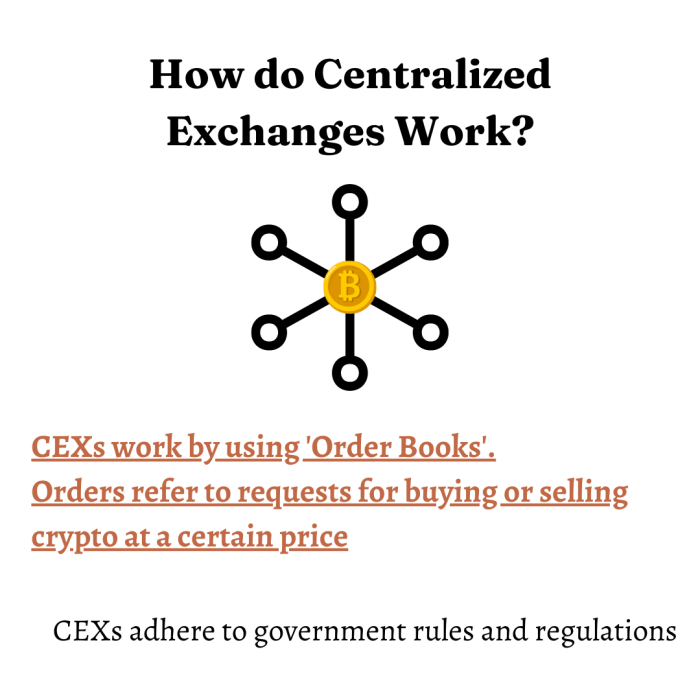
Security is a critical aspect in the world of cryptocurrency exchanges as it directly impacts user trust and the safety of funds. Centralized and decentralized exchanges (CEXs and DEXs) offer distinct security features and face different vulnerabilities. Understanding these differences is essential for traders and investors to make informed decisions about where to conduct their transactions.Centralized exchanges often implement robust security measures but also present certain risks due to their custodial nature.
On the other hand, decentralized exchanges promote user control over assets, yet they have vulnerabilities that can be exploited by malicious actors. By examining the security features and potential risks associated with each type of exchange, users can better protect their investments.
Security Measures of Centralized and Decentralized Exchanges
Centralized exchanges typically implement a range of security protocols to safeguard user assets, including:
- Cold Storage: Most CEXs store a significant portion of user funds in offline wallets to protect against online threats. For instance, platforms like Coinbase allocate approximately 98% of their assets to cold storage.
- Two-Factor Authentication (2FA): This adds an additional layer of security by requiring users to provide a second form of identification, usually through a mobile app.
- Regular Security Audits: Many centralized exchanges conduct routine security assessments to identify and mitigate potential vulnerabilities in their systems.
In contrast, decentralized exchanges adopt a different security framework, focusing on user autonomy and minimal custodial risk. However, they still face unique challenges:
- Smart Contract Vulnerabilities: DEXs operate on smart contracts, which can contain coding flaws. For example, the infamous DAO hack in 2016 exploited a vulnerability in a smart contract, resulting in a loss of over $60 million in Ethereum.
- Phishing Attacks: Users are often targeted through deceptive websites mimicking legitimate DEXs, leading to unauthorized access to their wallets.
- Liquidity Risks: DEXs may have lower liquidity, which can lead to slippage and unexpected losses during trading, especially in volatile market conditions.
Comparison Table of Security Features
The following table summarizes the primary security features and vulnerabilities of centralized and decentralized exchanges:
| Feature | Centralized Exchanges (CEX) | Decentralized Exchanges (DEX) |
|---|---|---|
| Control of Funds | Custodial (exchange holds funds) | Non-custodial (user maintains control) |
| Cold Wallet Storage | High percentage in cold storage | Not applicable (funds are in user wallets) |
| Security Audits | Regular security assessments | Variable; dependent on smart contract audits |
| Two-Factor Authentication | Commonly implemented | Not typically available |
| Smart Contract Risks | N/A | Present; susceptible to coding flaws |
| Phishing Vulnerability | Present; targeting user accounts | Present; targeting user wallets |
“The security of an exchange is only as strong as its weakest link, whether it be a centralized authority or a decentralized protocol.”
User Experience and Interface
In the world of cryptocurrency trading, user experience (UX) and interface (UI) design play a crucial role in determining how effectively traders can engage with both centralized and decentralized exchanges. A well-designed UI enhances usability, making the trading process smoother and more intuitive. This section explores the key differences in user interfaces between these two types of exchanges, along with user feedback that highlights overall satisfaction.The user interface differences between centralized and decentralized exchanges can significantly impact a trader’s experience.
Centralized exchanges typically offer a more familiar, polished interface similar to traditional financial platforms. They prioritize ease of use, often featuring advanced charts, streamlined trade execution, and customer support options. On the other hand, decentralized exchanges tend to have a more utilitarian design, focusing on functionality over aesthetics. Their interfaces may include wallet integration and decentralized trading options but can sometimes appear less intuitive for new users.
User Interface Design Elements
When examining design elements that enhance user experience, several factors set centralized and decentralized exchanges apart. Centralized exchanges often incorporate features that make navigation seamless and straightforward, while decentralized exchanges emphasize transparency and security.Key elements enhancing user experience include:
- Centralized Exchanges:
- Intuitive Dashboards: Centralized platforms often feature comprehensive dashboards where users can view their trading history, open orders, and market trends at a glance.
- Customer Support: Many centralized exchanges offer dedicated customer service, which can be accessed directly through the platform, enhancing user confidence and satisfaction.
- Mobile Applications: Centralized exchanges frequently develop dedicated mobile apps, allowing users to trade on-the-go with user-friendly interfaces tailored for smaller screens.
- Decentralized Exchanges:
- Wallet Integration: DEX platforms usually provide seamless wallet integration, allowing users to trade directly from their crypto wallets without the need for account creation.
- Real-time Analytics: Many decentralized exchanges emphasize real-time data visualization, assisting users in making more informed trading decisions based on live market trends.
- Customizable Interface: Some DEXs allow users to customize their trading interface, enabling users to choose the information they want to display prominently.
User feedback regarding satisfaction levels tends to vary between the two types of exchanges. Centralized exchanges generally receive higher ratings for user experience due to their more polished interfaces and dedicated support systems. Users appreciate the simplicity and support, but concerns about security and control can dampen enthusiasm. In contrast, decentralized exchanges often garner praise for their commitment to privacy and security, although some users report frustrations with the steeper learning curve and less intuitive navigation.
Overall, the choice between centralized and decentralized exchanges often comes down to individual preferences regarding usability, security, and the type of trading experience desired.
Transaction Speed and Fees
In the world of cryptocurrency trading, understanding transaction speed and fees is crucial for traders looking to optimize their trading experience. The efficiency of an exchange can significantly impact overall trading performance, including the timing of trades and the costs incurred during the process. This section delves into how centralized and decentralized exchanges compare in terms of transaction speeds and fee structures.
Transaction Speed Comparison
Transaction speed is a critical factor that influences trading decisions. Centralized exchanges (CEXs) typically offer faster transaction speeds due to their centralized infrastructure and optimized systems, which allow them to process trades in milliseconds. In contrast, decentralized exchanges (DEXs) may experience slower transaction speeds as they rely on blockchain technology, which can be subject to network congestion and other delays.Centralized exchanges can handle higher volumes of transactions simultaneously thanks to their robust server infrastructure.
Conversely, decentralized exchanges depend on the blockchain’s throughput, which can vary depending on the network conditions and gas fees, leading to slower processing times during peak demand.
Fee Structures for Trading
When considering the cost of trading, both centralized and decentralized exchanges have different fee structures that traders should be aware of. Below is a comparison of the fees associated with each type of exchange.Centralized exchanges generally charge trading fees that can range from 0.1% to 0.5% per transaction. These fees may include withdrawal fees, deposit fees, and trading fees, which can add up based on the frequency of trading.On the other hand, decentralized exchanges usually do not charge traditional trading fees; instead, users pay network gas fees for processing transactions on the blockchain.
These gas fees can fluctuate based on network activity, which can sometimes lead to higher costs during busy periods.
| Exchange Type | Average Transaction Speed | Typical Fees |
|---|---|---|
| Centralized Exchange | Milliseconds | 0.1%
|
| Decentralized Exchange | Seconds to Minutes (variable) | Gas fees (variable, depends on network congestion) |
Understanding the interaction between transaction speeds and fees is vital for making informed trading choices. Traders must weigh the benefits of speed against the costs of executing trades on different platforms, ensuring they select an exchange that aligns with their trading strategy and financial goals.
Regulatory Environment
Source: australiaunwrapped.com
The regulatory landscape plays a crucial role in shaping the operations of both centralized and decentralized exchanges. Regulations are designed to protect consumers, enhance market integrity, and curb illicit activities. However, the impact of these regulations varies significantly between the two types of exchanges, influencing their operational models and user interactions.The implications of regulations on decentralized exchanges are particularly noteworthy.
While decentralized exchanges (DEXs) often operate without a central authority, they still face scrutiny from regulatory bodies aiming to enforce compliance. This scrutiny can manifest in various ways, such as demands for transparency and adherence to anti-money laundering (AML) and know your customer (KYC) practices.
Impact of Regulations on Centralized Exchanges
Centralized exchanges are typically more susceptible to regulatory pressures due to their centralized nature, which requires them to comply with local laws and international regulations. The following points highlight how regulations affect centralized exchanges:
- Licensing Requirements: Many jurisdictions require centralized exchanges to obtain licenses, which can be costly and time-consuming. For example, in the United States, exchanges must register as money services businesses (MSBs) or comply with state-specific regulations.
- Compliance Costs: Centralized exchanges often bear high costs in meeting compliance requirements, including regular audits and the implementation of KYC/AML processes. This can affect their profitability, as seen with companies like Coinbase, which has invested heavily in compliance measures.
- Market Entry Barriers: Stringent regulations may deter new players from entering the market, leading to reduced competition and innovation. This has been evident in countries with a heavy regulatory burden, such as China, where many exchanges have shut down or moved operations abroad.
Impact of Regulations on Decentralized Exchanges
Decentralized exchanges, while built on principles of autonomy and user control, are not completely exempt from regulatory influence. The following points provide insight into how regulations affect DEXs:
- Regulatory Scrutiny: Although DEXs typically do not hold user funds, regulators are increasingly scrutinizing their activities to prevent market manipulation and protect investors. For instance, the Financial Action Task Force (FATF) has proposed guidelines for DEXs to follow.
- Potential for Censorship: Regulations aimed at DEXs could lead to enforced censorship of transactions, undermining the fundamental ethos of decentralization. A recent case involved the U.S. Treasury sanctioning Tornado Cash, a protocol used for mixing cryptocurrencies, which raised concerns about the broader implications for DEXs.
- Impact on User Adoption: Users may be deterred from using DEXs if they perceive them as being under threat from regulators, potentially stifling growth. The uncertainty surrounding regulation can lead to hesitancy among users, as evidenced by fluctuations in trading volumes during periods of heightened regulatory announcements.
“Regulatory pressures can reshape the cryptocurrency landscape, impacting how both centralized and decentralized exchanges operate in the marketplace.”
Future Trends in Exchange Types
As the cryptocurrency landscape continues to evolve, both centralized and decentralized exchanges are poised for significant transformations. The integration of new technologies and shifting user preferences will drive these changes, leading to innovations that could redefine how trading is conducted. Understanding these trends is essential for traders, investors, and enthusiasts alike.
Potential Developments for Centralized Exchanges
Centralized exchanges (CEXs) are likely to adopt more advanced technologies to enhance user security and streamline operations. Innovations such as artificial intelligence (AI) and machine learning are expected to play a substantial role in improving trading algorithms and risk management protocols. Moreover, the growing emphasis on user privacy may lead CEXs to implement zero-knowledge proofs and enhanced encryption techniques.
- Integration of AI and Machine Learning: CEXs will employ AI to analyze trading patterns, predict market trends, and offer personalized trading experiences based on user activity.
- Enhanced Security Measures: With increasing cyber threats, CEXs will adopt multi-signature wallets, biometric verification, and advanced fraud detection systems to protect users’ assets.
- Improved Regulatory Compliance: CEXs will continue adapting to evolving regulations, implementing more robust KYC (Know Your Customer) and AML (Anti-Money Laundering) processes to ensure compliance and maintain user trust.
Innovations Expected in Decentralized Exchanges
Decentralized exchanges (DEXs) are set to undergo significant advancements that will enhance their functionality and user experience. The emergence of layer-2 solutions, cross-chain interoperability, and automated market makers (AMMs) are key innovations shaping the future of DEXs.
- Layer-2 Solutions: Technologies like Optimistic Rollups and zk-Rollups will improve transaction speeds and reduce fees on DEXs, making them more competitive with CEXs.
- Cross-Chain Interoperability: Solutions such as atomic swaps and wrapped tokens will enable users to trade assets across different blockchains seamlessly, expanding the liquidity and options available on DEXs.
- Automated Market Makers: The integration of AMMs will allow for more efficient trading without the need for traditional order books, improving efficiency and user accessibility.
Emerging Technologies Impacting Exchanges
Several emerging technologies have the potential to significantly impact both centralized and decentralized exchanges. These include blockchain advancements, the rise of decentralized finance (DeFi), and improvements in user interface and experience.
- Blockchain Advancements: Innovations in blockchain technology, like sharding and increased scalability, will enhance the performance and accessibility of both CEXs and DEXs.
- Growth of DeFi: The expansion of DeFi platforms will contribute to the evolution of DEXs, providing users with more financial options and enhancing the liquidity of decentralized markets.
- User Experience Enhancements: Improved user interfaces, driven by user feedback and technology, will make trading processes more intuitive for both novice and experienced traders.
“The future of cryptocurrency trading lies in the fusion of security, speed, and user-centric innovations, redefining how exchanges operate.”
End of Discussion
In conclusion, the exploration of centralized versus decentralized exchanges reveals a complex interplay of benefits and challenges that traders must consider. Centralized exchanges provide convenience and speed, while decentralized exchanges prioritize user control and security. As the cryptocurrency market continues to evolve, understanding these differences will empower users to make informed decisions that align with their trading goals and risk tolerance.
Ultimately, the choice between these two exchange types hinges on individual preferences and the desired trading experience.
FAQ Corner: Comparing Centralized Vs Decentralized Exchanges
What is a centralized exchange?
A centralized exchange is a platform that acts as an intermediary for buying and selling cryptocurrencies, usually requiring users to create accounts and trust the exchange with their funds.
What is a decentralized exchange?
A decentralized exchange allows users to trade cryptocurrencies directly with one another without relying on a central authority, often offering greater privacy and control.
Which type of exchange is safer?
Decentralized exchanges are generally considered safer due to their lack of central control, reducing the risks associated with hacks and regulation issues inherent to centralized exchanges.
Can I trade on both centralized and decentralized exchanges?
Yes, many traders use both types of exchanges to leverage the benefits of each, depending on their trading strategies and needs.
How do fees compare between the two types of exchanges?
Centralized exchanges often have more structured fee schedules, while decentralized exchanges may charge less but can have varying costs depending on network fees.